? LOOK CLOSER
Faith healing · A critical perspective

How faith healers like self-proclaimed ‘Apostle’ John Wall fool you.

A closer look at self-proclaimed “Apostle” John Wall and the powerful experiences that can make healing claims feel convincing.

Shaking. Falling. Speaking in tongues. Feeling suddenly better. An experience can be sincere and overwhelming without establishing a miracle.

Watch: How Faith Healers Fool You ↗
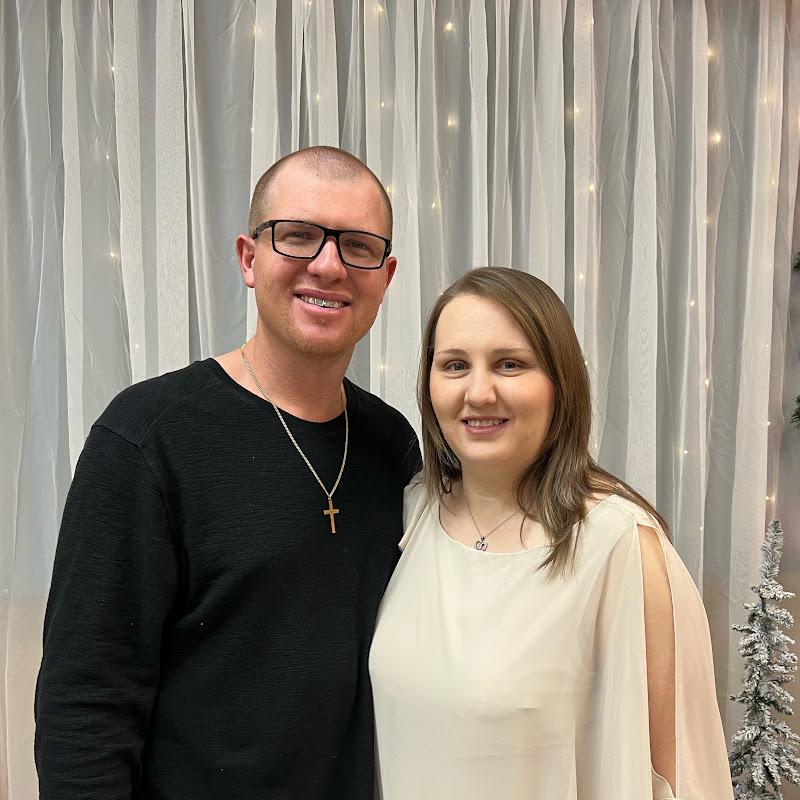
Apostle John Wall, left, in his public YouTube channel photo
John Wall
Photo from the public “Apostle John Wall.” YouTube channel. Used to identify the subject of this commentary. This website is independent and unaffiliated.
Start here / Featured video

How Faith Healers Fool You

Open on YouTube ↗

Featured commentary on faith healing. Its inclusion is not a claim that it investigates John Wall specifically. If playback is unavailable here, use the YouTube link above.

Behind the experience

Real feelings.
Other explanations.

Intense gatherings combine anticipation, public attention, music, repetition, authority and shared emotion. The mechanisms below are possible explanations, not diagnoses of anyone in a video—and not evidence that every participant or preacher is deliberately deceiving people.

01

Why people shake

Fear, excitement and emotional arousal can produce trembling. If someone starts breathing too rapidly or deeply, falling carbon dioxide levels can also cause tingling, dizziness, muscle stiffness and tremor. Those sensations can feel extraordinary when the room interprets them as spiritual power.

Source 1: hyperventilation and physical symptoms ↓

The sensation does not identify its cause. Shaking is not, by itself, proof of a spirit entering or a demon leaving. A video cannot tell us whether someone is hyperventilating, experiencing another involuntary response, or has a medical condition.

02

Why people fall down

There is no single explanation for what is sometimes called being “slain in the Spirit.” Dizziness or fainting can occur with overbreathing. In some situations, expectation, watching others fall, a leader’s cues, or physical pressure may influence balance and behavior.

A person may consciously cooperate or experience their response as involuntary. Neither possibility can be established just by watching a short clip.

A fall is an observation, not a supernatural test. The presence of catchers and an expectation of falling may help create a familiar social script; that is a possible interpretation, not a finding about John Wall.

Source 1: dizziness and fainting · Source 4: social context and ritual perception

03

Speaking in tongues: learned behavior

Glossolalia is speech-like vocalization that does not communicate in an identifiable ordinary language. It is different from demonstrating fluency in a real language the speaker has never learned.

Research has experimentally demonstrated that glossolalia-like speech can be learned. Listening to a model, imitating sounds and rhythms, and practicing can help a person produce it. In a congregation, encouragement and repeated exposure offer a plausible route for that learning.

Source 2: Spanos and colleagues, 1986 ↓

Learned does not mean consciously fake. A practiced behavior can feel spontaneous or effortless. The fact that people can learn this vocal behavior means its occurrence alone cannot establish supernatural language ability. It does not settle every participant’s personal religious interpretation.

04

“The demon is coming out”

When shouting, trembling or crying is labeled “deliverance,” the label supplies a story about what is happening. It does not establish the cause. Fear, distress, expectation and responses to the people nearby are alternative possibilities to consider.

Research on other religious rituals shows that emotional arousal and group context can shape how effective a ritual seems. Applying that finding to a particular deliverance service is an interpretation, not a diagnosis.

Intensity is not verification. A louder command or a stronger reaction does not demonstrate that a demon exists or has left. People in distress deserve care, dignity and an opportunity to stop—not an assumption of possession.

Sources 4–5: group context and shared arousal ↓

05

“I’m healed!”—what changed?

Expectations can change symptoms, including the experience of pain. Placebo effects are real responses; they do not mean the person imagined their suffering. Relief immediately after prayer, however, does not demonstrate that an underlying disease has disappeared.

Symptoms also fluctuate, and other treatment may be helping. To attribute an improvement to a healer, those alternatives must be considered.

Source 3: NIH on placebo effects ↓

A testimony is a starting point. Ask what was diagnosed, what was objectively measured, and whether improvement lasted. A public declaration or a brief change in movement cannot replace independent medical assessment.

06

Why a crowd makes it feel convincing

When everyone around you treats an event as extraordinary, that consensus can influence your interpretation. Research has found alignment of bodily arousal in collective rituals and convergence in perceived ritual effectiveness in groups.

These findings concern human social responses. They do not show that a particular gathering is staged or that its participants are dishonest.

Ask what you are not seeing. A selection of successful testimonies does not tell you how many people received prayer without improvement, how outcomes were checked, or what happened afterward.

Sources 4–5: ritual and group effects ↓

You don’t have to deny someone’s experience to question the explanation attached to it.
Apply the same standard to everyone

Apostle John Wall:
what would count as evidence?

The John Wall discussed here publishes religious videos as “Apostle John Wall.” on YouTube. This is an independent commentary website about him.

For John Wall—or any person claiming supernatural healing—the useful question is not how moving the service looks. It is whether the claim survives careful, independent checking.

This page critiques claims and interpretations. It does not establish that John Wall committed fraud, staged a healing, or knowingly deceived a participant.

  1. 01 / A documented starting pointWas there a confirmed diagnosis before the event?
  2. 02 / Independent measurementsDo appropriate tests show a meaningful change, beyond a testimony?
  3. 03 / Follow-up over timeDid the improvement persist after the gathering?
  4. 04 / Alternative explanationsWere medication, treatment, symptom fluctuation and expectation considered?
  5. 05 / The complete pictureAre unsuccessful cases counted as well as apparent successes?
Read beyond this page

Sources & further reading

  1. Merck Manual: Hyperventilation syndrome — physical symptoms, diagnostic uncertainty and the need to exclude other causes.
  2. Spanos et al. (1986): Glossolalia as learned behavior: an experimental demonstration — Journal of Abnormal Psychology, 95(1), 21–23.
  3. NIH / NCCIH: Placebo Effect — how expectation can influence health outcomes.
  4. Groups and Emotional Arousal Mediate Neural Synchrony and Perceived Ritual Efficacy (2018) — group context and judgments of ritual effectiveness.
  5. Emotional contagion in a collective ritual (2024) — affective synchrony during a public religious ritual.
  6. “Apostle John Wall.” public YouTube channel — source of the self-description and identifying profile photo.